
Snofox Speaks: Interview with Bobby Beausoleil
Part One: Kenneth Anger, Invocation of My Demon Brother, and the Death of Hippie

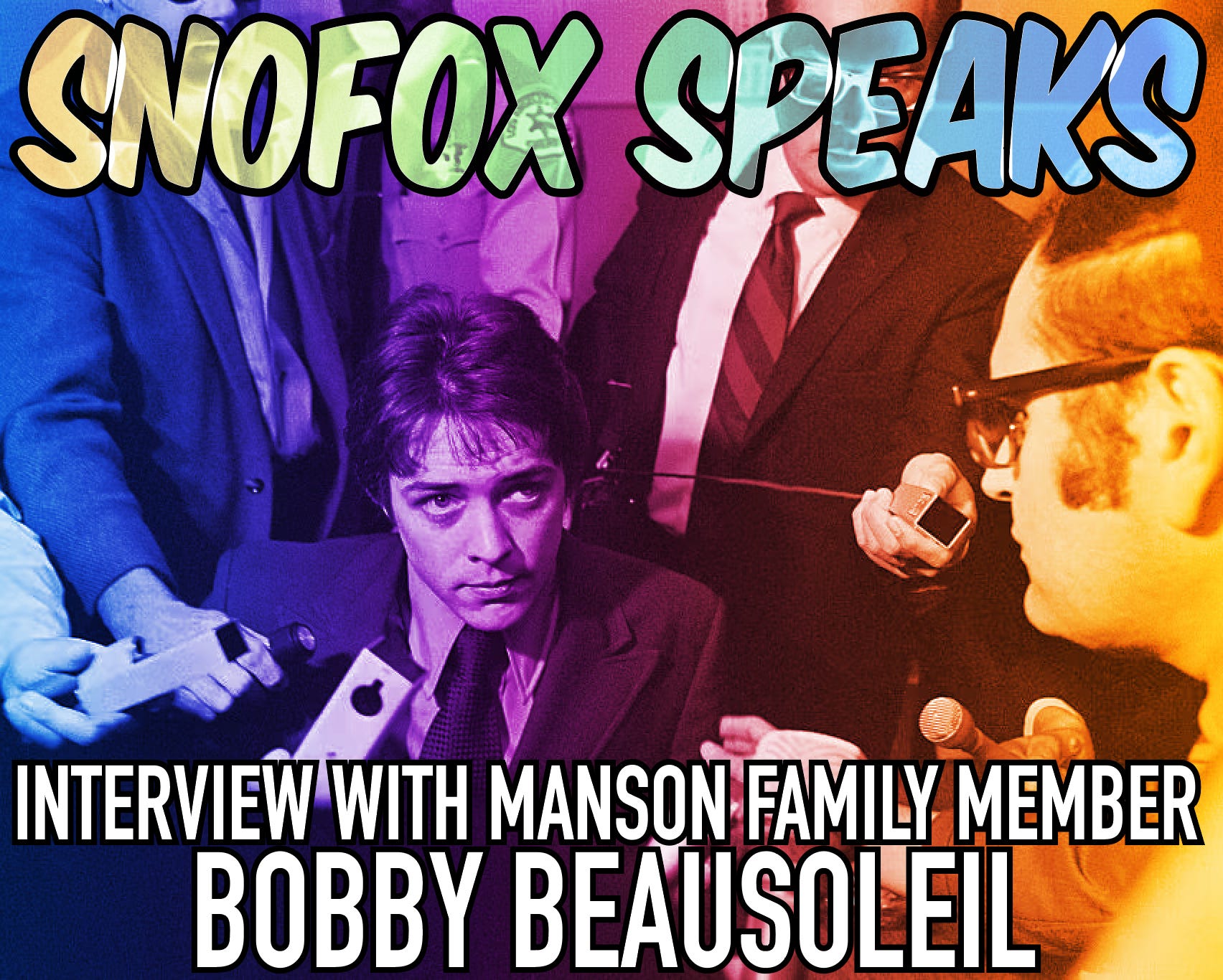
As part of McGowan May and the Laurel Canyon series, I am including this excerpt of an unexpurgated transcript of an interview I had done with Bobby Beausoleil in 2005. It offers some important inside information and deep background on the events we’ve been looking at.
CK: Well, let’s switch back to that just for a bit. Lucifer Rising in that incarnation became Invocation of My Demon Brother.
BB: Right.
CK: What was your role in the totality of that in that you were in a lot of the footage yourself, appearing in a lot of the footage, and at the same time you were working with the band The Magic Powerhouse of Oz. Was this more like a two-way collaboration between you and Ken, or were you being directed by him? How exactly did that go?
BB: He never directed me except for when we were doing filming. I made a deal with him, and it went like this. He saw me perform with the orchestra at the Invisible Circus, which was an event that was staged by a group of people comprising the Diggers, the Mime Troupe, the Sexual Freedom League, a number of different groups. And it was, like, supposed to be a love-in free-for-all in this big cathedral. There was a church complex called Glide Memorial Church and it was various, like, little auditoriums in it, and then there was the main tabernacle, what you would call that cathedral area, the high-ceilinged church?
CK: The sanctuary.
BB: And there were various little rooms, areas. Anyway, the pastor, who was really liberal and didn’t know what he was getting in for, okayed this thing. And they eventually had to move it out after 24 hours. They finally, they moved it down to Golden Gate Park down by the beach. But it was supposed to have been a three-day event. And we played the first night.
[interruption to redial]
BB: We were at the Glide Memorial Church during the event called the Invisible Circus. Kenneth was there. We were the band that was kicking off the whole event. People had shown up earlier in the afternoon, and there were a lot of people milling around, and there were conga players, you know, the black guys from the Fillmore district and all. Grooving, you know?
But we had set up. The day before, a false wall was set up in this little auditorium next to the main church area, and there was to be a poetry reading in it. And they’d set up a false wall made of paper, but that nevertheless looked real from the other side, where they were having the poetry reading. My band set up behind the false wall. We had, like, I think it was about eight or nine topless girls belly dancing, I guess. They weren’t really belly dancers. They were just, you know…
CK: Playing the part, yeah.
BB: Yeah, they were young chicks, and they were liberated young chicks, and they wanted to-- You know, the whole idea was that everybody, they wanted to get everybody making love. The promoters just wanted everybody just to, you know…
CK: Let it all hang out.
BB: Let it all hang out, have a, be creative, be musical, be Bacchanalian, you know? So we set up, we had our equipment set up behind the false wall before the poetry reading began, and then on cue we started playing one of our pieces, and the girls busted through the paper wall and started dancing with the people that were in the audience. So it became… It was pretty wild. It was a pretty wild scene.
And I did a little performance with one of the girls. Not a sexual performance, not a real sexual performance, although it was certainly implied. You know, playing my guitar to her dancing. I had her stood up on a chair next to me as I was playing, we were doing this sort of thing. And Kenneth, he really tuned into that. He saw me then after the gig, he accosted me out in the parking lot. I was out there with my band smoking a joint with them, and he came up to me and he said, “You are Lucifer!”
I didn’t know what he was talking about. I didn’t know who this guy was, y’know? Anyway, so he explained himself and explained that he was making a film called Lucifer Rising and wanted me to star in it.
CK: And this was when he was right off of Scorpio Rising, too, right?
BB: Well, fairly, yeah. He already had some other guy lined up doing the part, supposedly, but apparently he didn’t work out. Kind of like the Jimmy Page situation, I supplanted somebody else.
CK: Well, let me ask you a question because this ties into something that I want to talk…
BB: Well, let me finish answering your question. It’ll only take a moment. You asked the question, what was the arrangement? The deal that I made with him is that I would play the part of Lucifer in his film if I did the soundtrack. That’s how that started. I don’t know what he had in mind for his soundtrack, probably some recording, some records, because that was his style at that time.
He had done Kustom Kar Kommandos and Scorpio Rising and other films just using recordings, just using records for his soundtracks. I told him I wanted to do an original soundtrack, and if he would agree to that, I would act in his film. So he directed me when I filmed, but he didn’t direct me in the music. I was pretty much on my own, and I considered it a collaboration. At that time I don’t really think he did, because I was just a cute kid.
CK: What was his setup? He obviously didn’t have a script, right?
BB: No. He kind of… the way he worked, at least when I was working with him, and I think, judging from what I’ve seen of his other films, he was very spontaneous when he was filming. He actually had somebody else operating the camera, and he would have the person in front of the camera do things that they didn’t even know what they were doing. They would just, “Well, make this sort of gesture.” And with me, he was having the light show projected onto me. There was a black velvet background that didn’t reflect light, and I was standing on something in front of that black background with The Great Northwestern Phantasmagoria Light Show projecting light patterns on me.
CK: And you had your top hat on.
BB: For some of it, and some of it not. And I was putting on different robes and stuff that he had had made by a seamstress for the Lucifer person, for the Lucifer persona being portrayed.
CK: Let me ask you another question. What was he trying to get at, do you think, when he was doing that film? The reason I ask is that I know in late ’67, ’68, the scene in San Francisco started to get a little heavy.
BB: Yeah.
CK: There was a lot of bikers and bad drugs and just a lot of…
BB: Things started to go south, yeah, right around that time. Which, it was inevitable that it happened that way.
CK: Now, what was Kenneth’s reaction to that? Was he excited about that? I mean, did that play into what he wanted to do on the film?
BB: Well, he saw the youth culture as the emergence of, Crowley’s prophecy of the child of Horus being represented, you know, the changing of the gods from the ages of Isis and Osiris to the Age of Horus, which was their child. So it was the age of the Child, and so he saw this as the emergence of the Aquarian Age, which is the Age of Horus or the Age of the Child. And I was to be representative, iconic of that in the film.
So there was no script. He had maybe some kind of… well, it’s not really a story. If you look at his films you’ll see that there is a lot of symbolism, there is a lot of gesture, things done… it’s like a dance. And if you look at it like that, as really dance, and don’t try to make too much sense of it, it’s really, he’s done some remarkable things. It really communicates something. If you’re trying to find a story, you’re going to miss the point, I think.
CK: Well, it had a huge, I think, especially that film had a huge influence on rock video.
BB: Oh, I think so, too.
CK: You know, later on in the Seventies and Eighties.
BB: Yeah. I absolutely think so, too. Although Kenneth doesn’t like that.
CK: Doesn’t like that connotation?
BB: No.
CK: I think I brought it up with him when I talked to him, but that was so long ago I forget. So you guys kind of fell out at one point in time. What happened with that?
BB: Well, it’s just, we had a… The Magic Powerhouse wanted to play a gig, so I started lining up a gig at the Straight Theater. Kenneth got involved, which was fine with me, but it was kind of like at the last minute, and he wanted to have it be the Equinox of the Gods celebration, that’s what it was called, an event at the Straight Theater, but he was a big help in one respect. He paid for posters to be made, and some props, rented scrim for the special light show effects that we were doing, even had a projection of portions of the film on the scrim, and it was like the band was playing inside the film because the scrim is kind of translucent, like the effect of having one video playing over another, the two of them kind of mixed.
That’s the effect of scrim, only this was live, you know? Like we’re inside a light show. So it was a great effect. And he was doing, he had a programmed ritual as part of it, and right in the middle of it, the tape broke. And his part of the ritual, which he had prerecorded that day reading from Crowley’s Book of the Law. The tape broke and he just kind of like started improvising, and I think he was… it just, things didn’t go well, and we ended up blaming each other. And although, it really actually… In retrospect, from the audience viewpoint it went great. It was really interesting. It just wasn’t the way we had planned it.
The band’s gig was good and it was weird and people dug it. Everybody was in costumes. That was kind of the thing. It was “everybody show up in costumes.” We didn’t have, there was no dance license, so we used the dance floor at that point at the Straight Theater, so we used the dance floor as an extension of the stage and added to the band. And there was this guy that played a huge, huge set of gongs. It’s like, y’know, a set of gongs like 25 feet long or something, at least 20 feet long. Some as tall as a man down to dishpan size. And so he played along with us, he joined the performance.
We used the dance floor as his platform as well as Kenneth Anger’s platform for his ritual, which we had props from the movie lit up using lighting, using some of the film lights, the spotlight and so on, to make the dance floor sort of an extension of the stage. And then everybody just showed up in costumes and the audience-- It was really a very colorful event. But there was bad blood afterwards and we had a falling out, and I wound up leaving San Francisco shortly thereafter after the ritual funeral of the Haight-Ashbury.
CK: Oh, that was with the Diggers?
BB: The Diggers and the Mime Troupe put together an event in which everybody… not everybody, but a lot of us participated in. The Haight Street Merchants didn’t participate.
CK: Yeah, I bet!
BB: There was a conflict between the Diggers and the Haight Street Merchants because the Haight Street Merchants had publicized Haight-Ashbury as the Mecca for the movement, and it just overwhelmed that little community to such a degree. It brought in the criminal element and it brought in the predatory element, and it just kind of destroyed the whole thing that we were doing by just having just too much, and too many people coming from all over the country into this little place, this little village.
CK: A lot of runaways and stuff like that.
BB: Yeah, and runaways attracting hard guys, you know, predators.
Of note, I only recently learned that Beausoleil went to high school with the notorious Michael Aquino in Santa Barbara. I think Aquino was a year ahead. Then they both wind up in SF hanging around Satanists … amazing. What are the odds a military PSYOPs master and a member of one of the greatest PSYOP’s (my opinion) went to school together!? Small world indeed …
I think I remember reading this years ago. Did you put it on the Secret Sun blog maybe? Anyway, great stuff.